
On this page:
What is integrated catchment management?
In Victoria, integrated catchment management (ICM) underpins the sustainable management of land and water resources and contributes to biodiversity management.
Through this approach, the Victorian Government and its partners seek to achieve sustainability and ensure the long-term viability of natural resource systems and human needs for both current and future generations.
Victoria’s framework for the integrated management of catchments is established under the Catchment and Land Protection Act 1994 (the CaLP Act).
ICM is the coordinated management of land, water and biodiversity resources based on catchment areas. It incorporates environmental, economic and social considerations.
Catchment and land protection regions
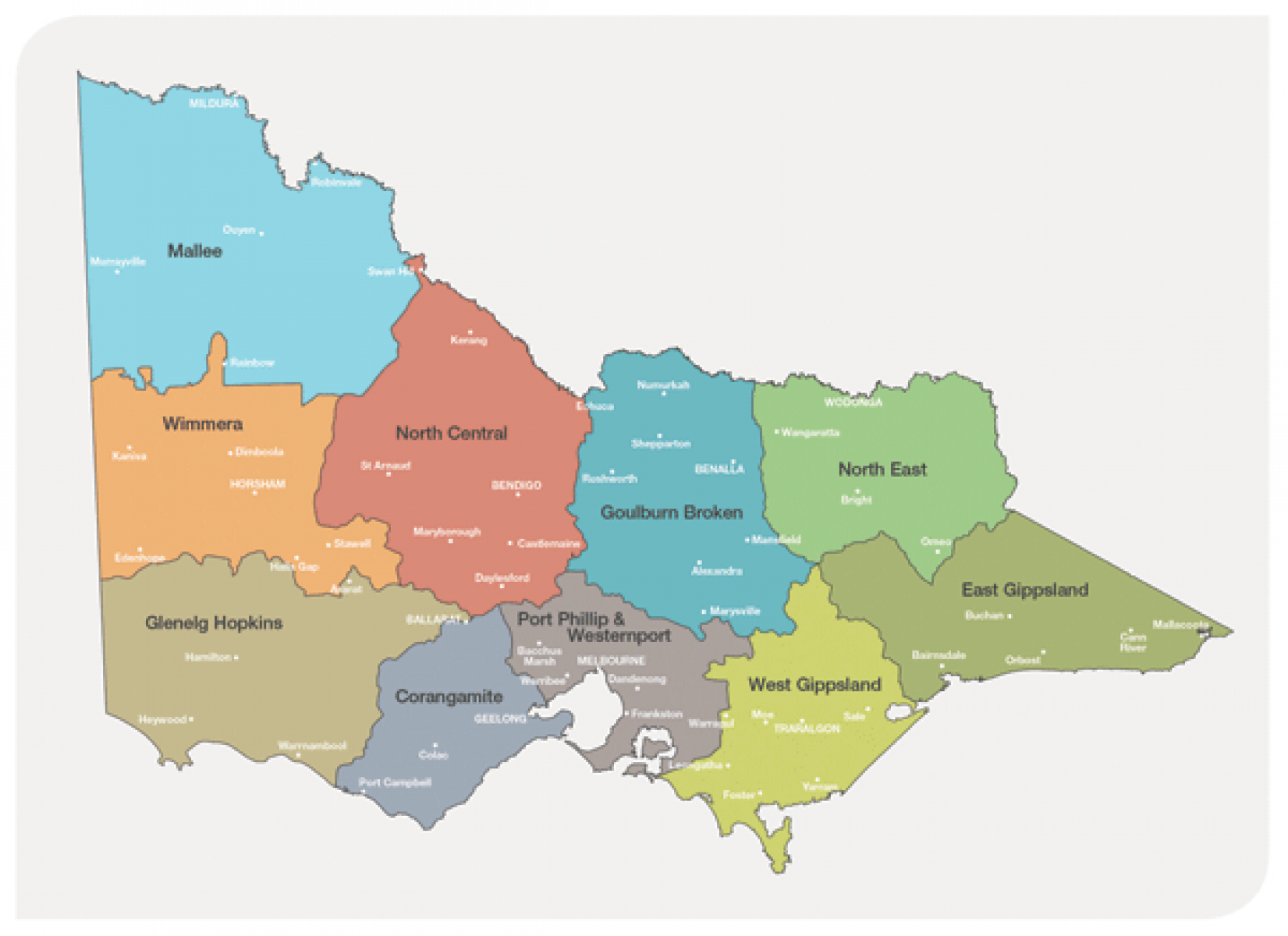
Victoria is divided into 10 catchment and land protection regions:
- Corangamite
- East Gippsland
- Glenelg Hopkins
- Goulburn Broken
- Mallee
- North Central
- North East
- Port Phillip and Westernport
- West Gippsland
- Wimmera.
The 10 catchment and land protection regions
Water and catchments regulatory framework
Regulation of Victoria’s water and catchments is essential to safeguard public resources and assets, protect ecosystems, and ensure safe and equitable access to water.
The Water and Catchments Regulatory Framework (2026) sets out DEECA’s regulatory responsibilities, and those of urban and rural water corporations and catchment management authorities (collectively, Water Authorities), in delivering strong, transparent, and fair regulation, under the Water Act 1989 and related legislation.
DEECA and Water Authorities will work with communities, stakeholders and water users to effectively regulate the take and use of water, infrastructure and waterways, supporting thriving, productive and sustainable communities, environments and industries.
For more information see the Water and catchments regulation webpage.
Page last updated: 01/10/26