
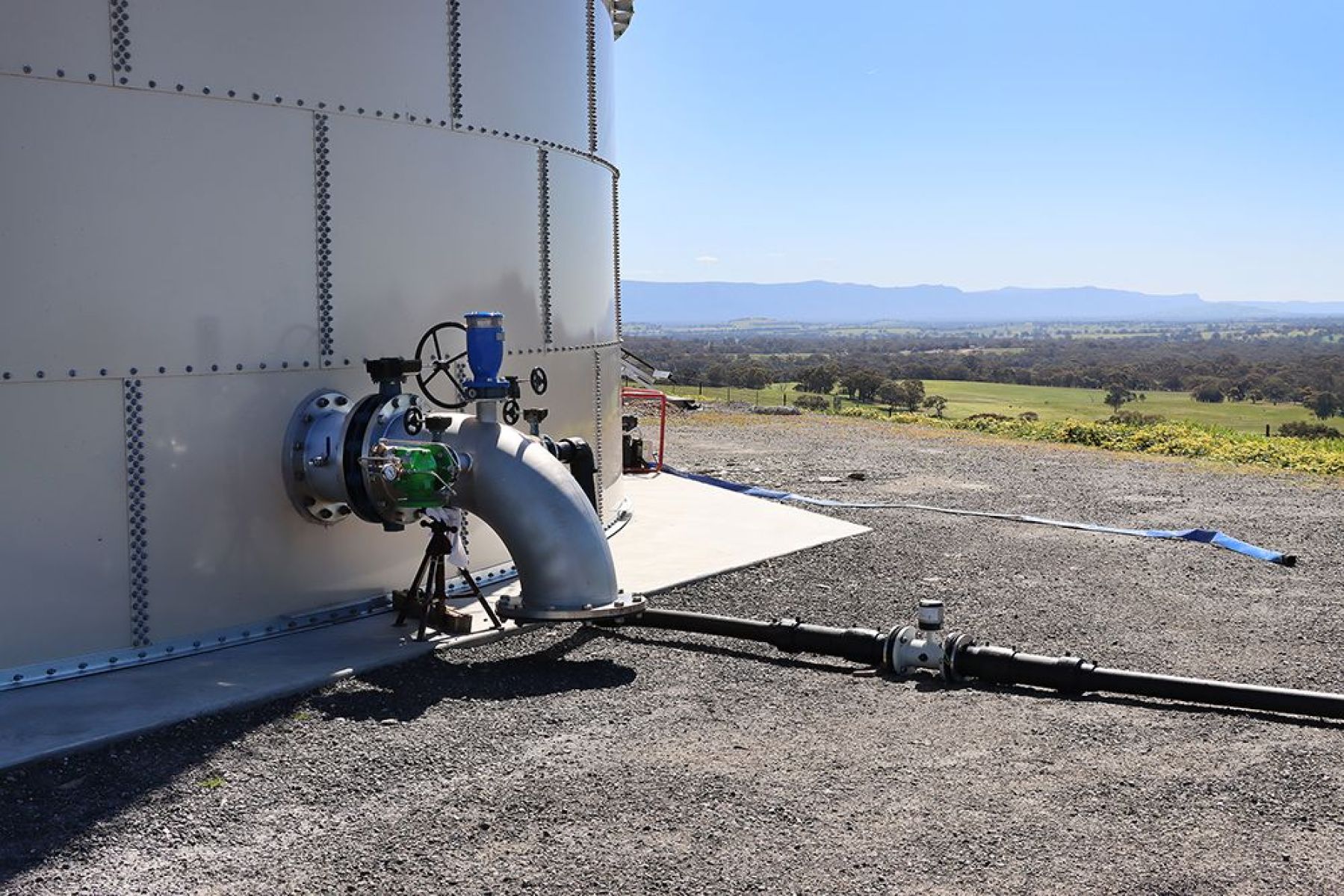
Two projects either side of the state show how investment in key water infrastructure can make a big difference. The projects are very different but their impact is important for the regional communities they serve.
The East Grampians Rural Water Supply project, which is now complete, extends the state’s water grid and is providing future water security for the farming region.
The pipeline will provide a water supply to more than 500 rural farming properties and has capacity to service up to 1,000 properties over an area of 200,000 hectares surrounding Ararat.
This $85.2 million project was funded by the Australian and Victorian governments, each contributing $32 million and a further $21.2 million contributed by Grampians Wimmera Mallee Water.
Lake Fyans will be the main water source for the new 584 km pipeline network, which means customers in the area will be supplied with high-quality water from the Grampians.
The pipeline has also been designed with integrated fire infrastructure and, in most cases, a fire hydrant or fire tank will be positioned within 5 km in any direction along the route to support bushfire response.
More than 20 smaller townships will also experience long-term benefits from the completion of the project.
In Gippsland, construction of the Traralgon-Tyers interconnect project is underway.
This will help secure water supply for approximately 5,000 residents in Glengarry, Toongabbi, Cowwarr and Rosedale.
The project involves construction of a 4.5 km pipeline to connect the towns to the Traralgon water supply network.
Residents will benefit from a more resilient water supply network that can better withstand adverse weather conditions, support future population growth, improve network efficiency and help manage long-term operating costs.
Connecting towns to the Traralgon Water Treatment Plant, which has greater treatment capacity and efficiency, is expected to reduce water wastage by up to 50 million litres a year.
The project is jointly funded by the Australian and Victorian governments through the National Water Grid Fund and delivered in partnership with Gippsland Water.
Page last updated: 02/10/26