
On this page:

Public consultation on the draft Victorian Waterway Management Strategy

The third Victorian Waterway Management Strategy (the strategy) provides a 10-year framework to sustain waterways (rivers, wetlands, estuaries and floodplains) and balance the many ways Victorians use and value them.

Public consultation on the draft strategy is now open and will close on 29 June 2026. Four online webinars will be held to help you to learn about the strategy and inform your responses to the feedback surveys.

To read the draft strategy, provide feedback, or register for an online webinar, visit Engage Victoria for more information about how you can get involved.

How the strategy has been developed to date

The draft strategy has been developed over 3 years with advice from Traditional Owners, partners in waterway management, independent experts, key stakeholders, and the broader Victorian community. Community feedback provided through a ’discussion starter’ helped shaped the strategy’s vision.

Project timeline

  1. 2023: Exploring issues and opportunities

    Prepare discussion starter
    Public and stakeholder consultation to explore issues and opportunities for the new Strategy

  2. 2023-2025: Policy development and drafting the strategy

    Collaborate with project partners and stakeholders on policy development
    Prepare draft Strategy

  3. 2026: Finalising the strategy

    Public consultation on the draft Strategy
    Prepare final Strategy

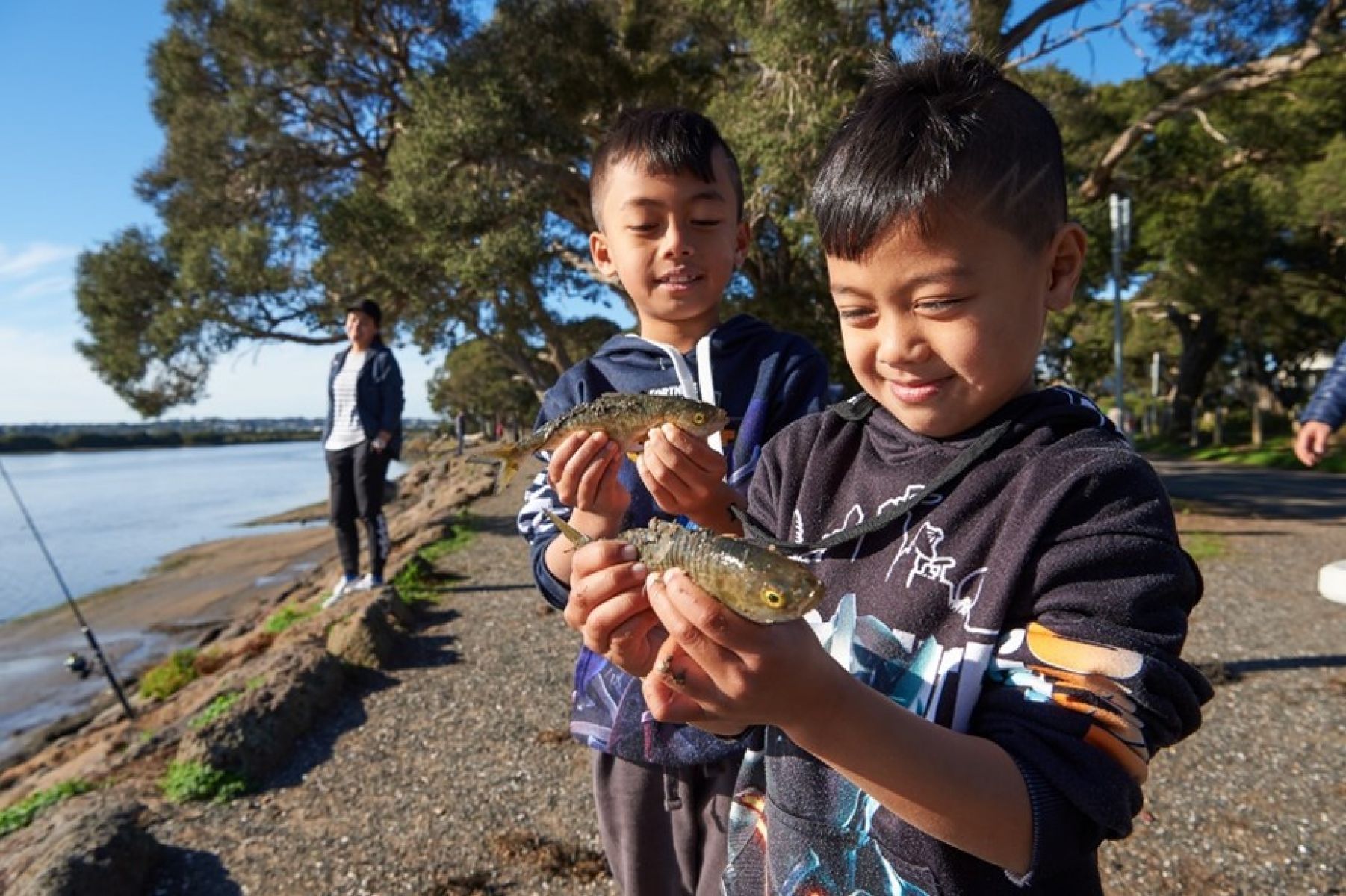
kids holding fish near barwon river
Above: Two children fishing at Barwon (Parwan) Heads Estuary

The existing Victorian Waterway Management Strategy was released in 2013, providing a detailed policy framework for managing the health of Victoria's rivers, wetlands and estuaries - collectively called waterways.

The current strategy has reached the end of its lifespan. A new Victorian Waterway Management Strategy is needed to guide the protection and care of waterways as our population grows and the climate changes. Refining and adapting our approach will ensure that Victoria’s waterways continue to be valued and enjoyed.

Key considerations for the new Strategy include:

  • Supporting the environmental condition of Victoria’s waterways
  • Adapting to climate change
  • Increasing decision-making for Traditional Owners in waterway management
  • Supporting communities to care for waterways
  • Guiding the development of regional waterway strategies
  • Considering any other areas or opportunities that come from community feedback

An Independent Review of the 2013 Strategy was completed in 2021. Visit evaluation and reporting for further information.

The My Victorian Waterway Survey social research was conducted in 2022 to better understand community values, aspirations, and concerns related to waterway management, and to deliver on Action 5.3 of the 2013 Strategy.

Together, the Independent Review, social research and discussion starter (see below) have informed the development of the new Strategy.

discussion starter was released in 2023, along with online consultation sessions, to inform the development of a new draft strategy.

Key themes identified through the consultation were:

  • Water quality
  • Riparian and wetland protection
  • Minimising impacts of extreme weather events
  • Community engagement
  • Partnership with Traditional Owners in waterway management

A summary of what we heard from this consultation is available. The new draft strategy has been developed based on the insights gathered from this consultation.

Victoria’s waterway and catchment management framework has been in place for nearly 30 years. Guided by the Victorian Waterway Management Strategy and regional waterway strategies, waterway managers and communities actively manage the condition of waterways in targeted areas.

This includes activities such as:

  • On-ground management, including riparian vegetation management and fencing
  • Applying regulation to protect waterway values, such as licensing of works on waterways
  • Collaboration with communities and land holders to work towards regional outcomes

Many departments, agencies, organisations and individuals play a role in caring for waterways across Victoria.

The Department and catchment management authorities produce progress reports for the Victorian Waterway Management Program to meet the needs of various stakeholders. Visit evaluation and reporting for more information.

Victorians value their waterways

Waterways are the lifeblood of many communities. They support health, wellbeing and productivity in both regional and urban areas.

Waterways and surrounding riparian land provide habitat for thousands of species of fish, insects, birds, mammals and plants, all of which depend on healthy waterways.

Waterways and floodplains also play a part in moving sediment and nutrients and supporting Victoria’s rich agricultural soils. Caring for waterways and biodiversity is particularly important as we adapt to climate change.

The 2022 My Victorian Waterway Survey of 6,240 Victorians, found that waterways are visited every day for a variety of reasons, such as relaxation and peace, recreation and fun, commercial and economic activities, a space for exercise, a place to engage with nature, experience personal mental health benefits, and for family and social connections.

Almost all respondents said that:

  • waterways nurture their own wellbeing (94%)
  • that healthy waterways are important for continued community needs (84%) for use by future generations (83%).

First Nations people have cared for Country and waterways since time immemorial, maintaining the health and flow of water and sustaining connections to place, each other, animals, ancestors, culture and Country.

The new Strategy will link with the Victorian Government’s commitments to self-determination for Traditional Owners, including Water is Life – Traditional Owner Access to Water Roadmap. The Strategy will play an important role in increasing Traditional Owner roles and decision-making in the management of waterways and delivering benefits for all Victorians.

The 2013 Strategy provides a detailed policy for managing Victoria's waterways over an 8-year period.

It aimed to maintain or improve the condition of our waterways so they can support environmental, social, cultural and economic values that are important to communities.

The 2013 Strategy provided direction for:

  • Regional decision-making
  • Investment and management issues
  • Roles and responsibilities of management agencies

Visit evaluation and reporting for information on the 2013 strategy outcomes.

Summary of the 2013 Strategy

Read Overview  of the Victorian Waterway Management Strategy (PDF, 2.8 MB)

Part 1: Strategy background

Chapter 1: About the Strategy
Chapter 2:  Introduction
Read Victorian Waterway Management Strategy: Part 1 strategy background  (PDF, 1.2 MB)

Part 2: Strategy fundamentals

Chapter 3 Strategy approach
Chapter 4 Regional waterway management
Chapter 5 Community participation
Chapter 6 Victorian Traditional Owner involvement in waterway management

Read Victorian Waterway Management Strategy: Part 2 strategy approach (PDF, 2.2 MB)

Part 3: Management issues

Chapter 7 Recreational use of waterways
Chapter 8 Environmental water management
Chapter 9 Riparian Management
Chapter 10 Water quality
Chapter 11 The river channel
Chapter 12 Wetlands
Chapter 13 Estuaries
Chapter 14 Waterways in urban areas
Chapter 15 Extreme events of flood and bushfire
Chapter 16 Invasive species management in waterways

Read Victorian Waterway Management Strategy: Part 3 management issues (PDF, 4.2 MB)

Part 4: Management arrangements

Chapter 17 Adaptive management
Chapter 18 Management arrangements
Appendices

Read Victorian Waterway Management Strategy: Part 4 management arrangements (PDF, 1.3 MB)

Page last updated: 01/06/26